| A Message from the Kalever Rebbe | |
|
| Parshas Vayakhel Pikudai 5786 | |
|
| Don't be stingy when spending money on Mitzvos | |
|
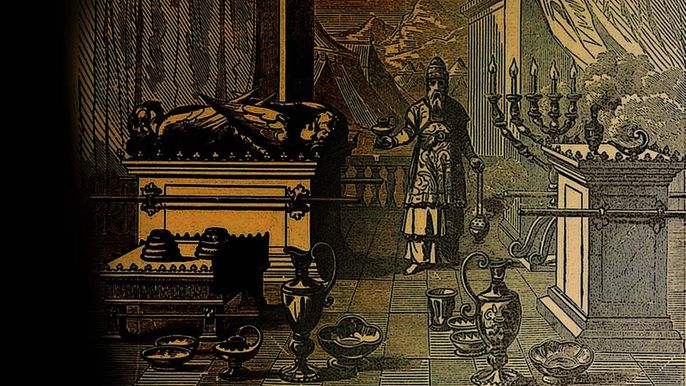
| "All the gold that was used for the work, in all the holy work." (Shemos 38:24) | |
|
| When you ask a Jew who has money well beyond his daily needs, why he is so careful with his spending on tzedakah and other mitzvos, he answers, "I'm saving it for my children." | |
|
| His children grow up and say the same: "For our children." The grandchildren, too, give the very same reply — and so it goes, generation after generation. | |
|
| A certain tzaddik once remarked: "I am waiting to see that fortunate child for whom all the generations have been laboring." | |
|
| On this very theme, the Gemara relates (Bava Basra 11a): King Munbaz distributed his own treasures and those of his forefathers during years of famine. His brothers and his father's household confronted him and said, "Your ancestors stored away and added to what their ancestors had left, and you squander it all!" He replied, "My ancestors stored their wealth below; I have stored mine above." | |
|
| The Chofetz Chaim, zt"l, writes in his Ahavas Chesed (Part 2, Ch. 14) that the verse "And from your own flesh, do not hide yourself" (Yeshayahu 58:7) teaches that a person is commanded to have compassion on himself — to use his money for tzedakah and good deeds. Why should a man toil his entire life only to leave it all to his heirs? He must look after his own future as well. After all, is he somehow less deserving than his own inheritors? He is the one who labored for the money. | |
|
| Generous in Gashmiyus, Stingy in Ruchniyus | |
|
| We see this in so many people: they spend freely on material things, but when it comes to spiritual matters, they suddenly remember to economize — so there will be something left for the children. | |
|
| At its root, the problem is a lack of emunah. They have not yet engraved upon their hearts the truth that all their money was given to them from Heaven for the purpose of performing mitzvos and good deeds — that this is their very mission in this world. And because they lack this awareness, they view spending on mitzvos as wasteful, not worth the same generous outlay they would gladly make on material things whose benefit they can see and enjoy right away. | |
|
| On this point, the Gemara relates (Sukkah 56a) the story of Miriam bas Bilgah. She was a young woman from a family of Kohanim who married a Greek officer. When the Greeks entered the Heichal, she kicked the Mizbei'ach with her sandal and cried out: "Lukos, Lukos! How long will you consume the wealth of Israel!" When the Sages heard what she had done, they punished her entire family. | |
|
| Chazal explain that the reason her parents were held responsible is the well-known saying: "What a child speaks in the marketplace, he heard from his father or his mother." This young woman had absorbed from her parents a way of thinking — that the observance of mitzvos causes financial loss. This led her to the ultimate degradation of declaring that the Mizbei'ach, upon which korbanos are offered to Hashem, was a waste of Jewish money. For those who lack the emunah that everything they have is given to them by Hashem for the sake of fulfilling His mitzvos, come to view a korban as a squandering of resources — a forfeiture of the physical enjoyment one could have derived from the animal's meat. | |
|
| Remembering Our True Purpose | |
|
| It is therefore fitting for every person to constantly review and impress upon himself and his household that the primary purpose of a person in this world is to perform mitzvos and good deeds. All material things were created to serve this end. One should therefore make every effort to use his money and material resources generously for mitzvos and good deeds, spending freely so that they are performed with the beauty and honor befitting the mitzvah. It is specifically on material indulgences that one should cut back — the very opposite of how the world typically conducts itself. | |
|
| A model of this ideal conduct is found in a story in the Yerushalmi (Pesachim, end of Ch. 4). Gabbai tzedakah stood outside the home of a wealthy man and overheard him telling his family to buy inexpensive vegetables. They assumed he had fallen on hard times, and so they did not approach him for a donation. But when they eventually met him, he gave them a generous sum and explained: "For myself, I economize; for tzedakah, I give freely." | |
|
| On this theme, Chazal teach us (Shabbos 133b): "'This is my G-d and I will glorify Him' (Shemos 15:2) — beautify yourself before Him through mitzvos: a beautiful tallis, beautiful tefillin, a beautiful sefer Torah, a beautiful lulav, and so on." They further teach (Bava Kamma 9b) that hiddur mitzvah extends up to a third — meaning, one should be willing to add up to a third more in cost to acquire a more beautiful esrog. | |
|
| The Mesilas Yesharim explains that from these teachings of Chazal we see clearly that it is wrong for a person to claim that Hashem does not need external embellishments in the fulfillment of His mitzvos. The truth is that performing the mitzvah alone, without hiddur, is not sufficient. One must honor and beautify it, for Hashem is called "Keil HaKavod" — the G-d of Glory (Tehillim 29:3) — and we are obligated to honor Him, even though He has no need for our honor. | |
|
| The Procession of the Bikkurim | |
|
| We see this vividly in the procession of the bikkurim, the first fruits. Chazal describe (Bikkurim 3:3): "The ox walked before them, its horns plated with gold and a crown of olive branches upon its head..." | |
|
| They further state (Mishnah 8): "The wealthy would bring their bikkurim in baskets of gold, while the poor would bring theirs in wicker baskets..." | |
|
| Here we see plainly how fitting it is to add to the body of the mitzvah in order to beautify it. From this we learn the principle for all the mitzvos of the Torah: that one's gold, silver, and material resources should be used for hiddur mitzvah — for this is the very purpose for which they were created and entrusted to us. | |
|
| Gold for the Sake of Heaven | |
|
| Perhaps this is the deeper meaning of our verse: "All the gold that was used" — all the gold that exists in the entire world was given to a person from Heaven solely for the purpose of "the work, in all the holy work" — to be used for kedusha, to fulfill one's Heavenly mission, to beautify the mitzvos, and to increase the honor of Heaven. Not to be stored away as an inheritance for one's children, and not to be spent on material indulgences. | |
|
|
|
Comments
Post a Comment