| A Message from the Kalever Rebbe | |
|
| In our generation we must raise children with extra praise | |
|
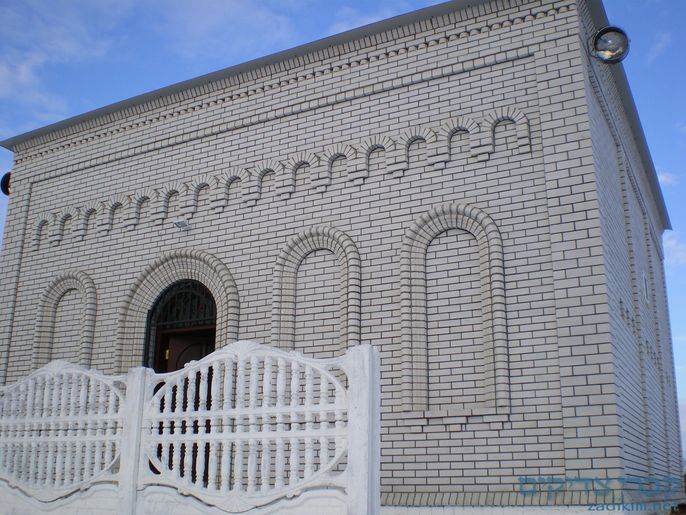 | Ohel of Reb Levi Yitzchok of Berditchev, Ukraine |
| |
|
| "And Yaakov arose and lifted his sons..." (Breishis 31:17) | |
|
| The parent–child relationship in our generation needs real strengthening. | |
|
| After years of speaking with parents and children around the world, it's clear that many families today struggle to build a healthy, meaningful connection. | |
|
| A key step in repairing this, is remembering a simple truth, that when guiding a child, our words must be gentle. As Koheles teaches, "The words of the wise are heard when spoken softly." | |
|
| Even when a parent needs to correct a child, it should be done kindly and with warmth—framed in encouragement, such as, "This behavior doesn't fit someone as smart and special as you." | |
|
| The pasuk in Mishlei (9:8) says, "Do not rebuke a scoffer, lest he hate you; rebuke a wise man, and he will love you..." The Shelah explains (Parshas Devarim, 19), that you should never rebuke someone else by calling him a "scoffer," because such harsh rebuke will only create hatred and will not inspire any change. Instead, tell him, "You are a wise and fine person. this behavior does not fit you. This behavior is beneath you." This will inevitably lead to him loving you and, therefore, accept your advice and guidance. | |
|
| The Gemara relates (Bava Metzia 85a), that after the passing of R' Elazar son of R' Shimon, his son strayed terribly from the Torah and behaved horribly. When Rabbeinu HaKadosh learned about this, he summoned this wayward son. And, when they met, he treated him with respect, dressed him in a garment of gold, and addressed him with the title "Rebbi." The son was so moved, that he swore never to return to his previous behavior. He repented and ultimately became a great Torah scholar. | |
|
| Closeness and Love: Bringing a Child Back | |
|
| This approach is especially crucial for a child facing difficult challenges in life. | |
|
| R' Aharon of Zhitomir, writes in Toldos Aharon (Parshas Toldos), that his rebbe, R" Levi Yitzchak of Berditchev, would draw close those who were spiritually distant even more warmly than he would his own students. | |
|
| Based on this, the Zhitomirer Rebbe offers a beautiful interpretation of the pasuk that says, "Yitzchak loved Eisav because game was in his mouth." Yitzchak saw Eisav's deceitful ways and that he was drifting away from the Path of the Just. Therefore, Yitzchak tried to draw him close by showing him love and affection, hoping that this would help bring him back to a life of holiness. But Yaakov, who was already wholesome and pure, did not require that same intensity of closeness. | |
|
| Similarly, the seforim hakedoshim explain, that Yaakov Avinu showed special love to Yosef and gave him the multi-colored coat that the other sons did not receive, because he saw with ruach ha-kodesh that Yosef would encounter a tremendous spiritual test. And, he wanted to find a way to instill in Yosef the inner strength needed to withstand that challenge. He concluded that the best way would be to show Yosef a unique, extra measure of love beyond what he showed the other children. | |
|
| This love saved Yosef during the great test he faced while in Egypt. He was only seventeen years old—precisely the age when a young person is fueled with passion and desire—when the wife of Potiphar approached him, dressed beautifully, and pressured him to sin, something that was entirely accepted in Egyptian society. But with the strength of the love his father had shown him, he succeeded in overcoming the temptation, refused with firmness, and fled from her. | |
|
| Similarly, in our generation—where the challenges and temptations around us are so great—we must be even more careful than in earlier times. Harsh rebuke is rarely effective today. Instead, we should guide our children gently, strengthening them through encouragement, praise, and genuine love. | |
|
| The Pele Yoetz explains, that just as physical remedies that were effective in earlier generations no longer work today—because human nature has changed—so too the "medicine of the soul" must change. In our generation, where boldness and defiance have grown, harsh rebuke simply does not achieve what it once did. | |
|
| R' Shlomo of Radomsk writes in Tiferes Shlomo (Pirkei Avos 1:6), that in the later generations One must be extremely careful not to rebuke others with harshness. Instead, we should approach them gently, with calming and reassuring words, drawing their hearts through love so that they are inspired to grow in Yiras Shamayim. | |
|
| If the Radomsker Rebbe emphasized this in his own time, then certainly in ours—when young people can so easily form deep connections with negative influences through modern technology—it is all the more crucial for parents and educators to build and nurture a warm, loving bond with their children. Even necessary words of mussar should be offered with joy, with love, and wrapped in extra praise. | |
|
| When children truly feel their parents' genuine love, they will not go searching for counterfeit forms of it. They won't become hooked on social networks or internet platforms, nor be swayed by those who try to mislead them. They won't attach themselves to friends their parents rightly disapprove of. Instead, they will form a strong, enduring connection with their parents and naturally desire to follow in the ways of their forebears. | |
|
| This idea helps us understand the pasuk in our parsha. | |
|
| After the Torah recounts the years that Yaakov lived with Lavan amongst the wicked, it says, "Yaakov arose." Yaakov experienced an "arising": he remained firm in his spiritual standing, and he raised a family that was also able to remain spiritually strong despite the countless spiritual challenges. | |
|
| How was he able to accomplish this? | |
|
| "And he lifted his children...." He constantly uplifted and elevated the spirits of his children with words of praise and love. | |
|
| Through this, he merited to leave behind a generation of wholesome, G-d-fearing descendants, instilling in them delight in serving the Creator — as it says (Yeshayahu 58:14), "Then you shall delight in Hashem, and I will cause you to ride upon the heights of the earth and feed you the heritage of Yaakov your father." | |
|
|
|
Comments
Post a Comment