"... do not stand in the entire plain. Flee to the mountain, lest you perish." (19:17)
Eisav and Yishmael
Chapter sixty-six of Tehilim describes, that prior to the arrival of Moshiach, the yidden will face challenging and difficult times. They will suffer at the hands of Eisav and Yishmael's descendants.
However, all who are inspired to return to Hashem through teshuva, will merit Divine protection. As Dovid Hamelech continues, all will acquiesce to Hashem saying, "We came in fire and water, and You took us out to satiety"... (Tehilim 66:12)
The Zohar HaKodesh (Volume III, p. 246) teaches that "fire" refers to Eisav and "water" to Yishmael. Before Moshiach arrives, Eisav and Yishmael will inflict suffering upon the yidden. However, through returning to Hashem, they will be taken out from those dangers to satiety.
Once the final redemption arrives, the yidden will say to Hashem (ibid 13-14), "I shall pay You my vows, which my lips uttered and my mouth spoke in my distress"...
Dovid HaMelech is providing us with a critical lesson. During the era before Moshiach's arrival, when facing tragedy and challenging times, the yidden must seek Divine protection by finding the inspiration to change and do teshuva. However, inspiration alone is not sufficient. They must harness the power of that inspiration by expressing it through a "kabbalah" – a commitment to change their behavior. Thereby, actualizing the potential for teshuva and change.
This is a mitzvah. As pasuk says (Breishis 28:20), "And Yaakov uttered a vow, saying..." Chazal taught (Breishis Rabba 70:1) that this pasuk teaches us, that whenever a Jew is facing perilous circumstances, when he is suffering, he must take a vow to accept upon himself a mitzvah.
Horses & Dogs
The tzaddikim have taught, that this is analogous to a rider and his horse. In order to make the horse move faster, the rider whips the horse. The horse doesn't recognize that this comes from a rider. All he sees is the whip; and he moves faster and faster trying to outrun the whip, the pain. As a result, the horse and rider move ahead together faster and faster.
This is what Dovid HaMelech wrote (Tehilim 32:9), "Be not like a horse, like a mule, that does not discern"... Meaning, you cannot be like a horse or mule that fails to see that there is a rider holding that whip. Rather, you must understand that every painful event that occurs in this world is directed by Hashem, for the sole purpose of arousing the yidden to strengthen their Avodas Hashem and their commitment to the mitzvos.
Especially in this generation, you must be diligent to protect yourself from the influence of those who would lead you to believe that everything that happens in this world is coincidence and happenstance.
The Mishnah at the end of Sotah describes the era before Moshiach's arrival, and teaches that the generation's face will be like the "face of a dog." The Chafeitz Chaim, zt"l, explained that when someone throws a stone at a dog, he chases after it and tries to bite the stone! He doesn't even acknowledge the person who threw the stone in the first place. So too, explained the Chafeitz Chaim, the generation before the arrival of Moshiach will not recognize, that Hashem has sent these challenges, to arouse the generation to do teshuva.
Personal Experience
This kabbalah needs to be a complete and heartfelt promise and commitment. Thereby, it will last long after the inspiration dissipates. And you cannot procrastinate. You must seize that inspiration with a sense of urgency; accept upon yourself a kabbalah immediately, while there is still a remnant of that inspiration, while your heart is still open to accepting that commitment.
The pasuk in Shir HaShirim says (2:7), "arouse the love while it is desirous"... The Ramban explained this pasuk to mean (Emunah V'Bitachon, chapter 19) that when a person is inspired to strengthen his commitment to a certain mitzvah, motivated by his love for Hashem, he must do that mitzvah immediately. This will create a vessel, and object that can imprison and hold that inspiration (the word חפץ-desirous can also be translated as object...). When you are aroused by the love... place it in a חפץ, the mitzvah thereby safeguarding that inspiration.
When a person commits wholeheartedly and fully to do a mitzvah that he has never performed before, he creates a new, good Angel that works for his benefit in the Upper Worlds and protects him from calamities in this world. As Chazal taught (Pirkei Avos 4:12), that a person who does a mitzvah earns an advocate, and teshuva and good deeds protect him from tragedy.
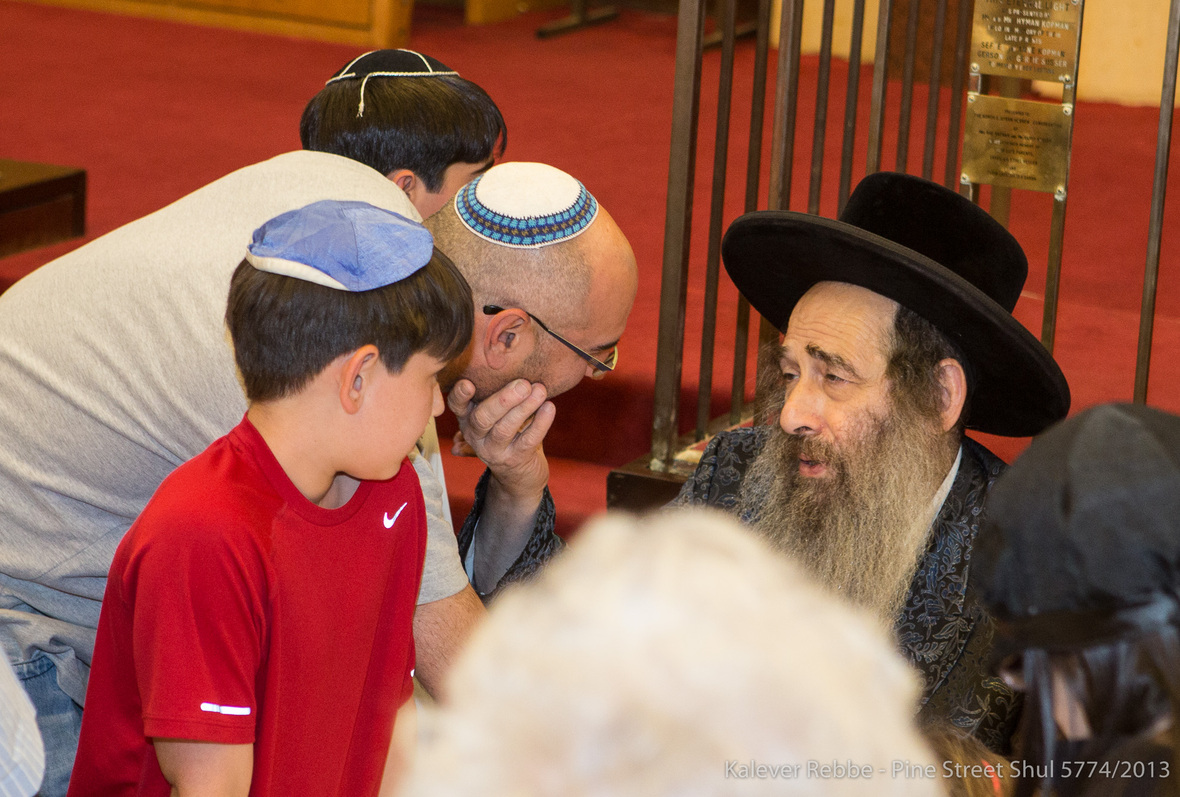
I can testify to this concept from personal experience. When men, women and children would come to me for a blessing, I would require that they make a verbal commitment to do a specific mitzvah. And, I have seen these individuals receive tremendous blessings and salvation as a result.
A wise child
The Yetzer Harah is cunning and wants to prevent you from accepting upon yourself a kabbalah. He tries to convince you that accepting upon yourself to keep fully just one mitzvah is useless. There are so many more that must be fully observed! However, the inescapable truth is that even a kabbalah on just one mitzvah can provide a person with Divine protection and blessings.
The Zanzer Rebbe, zt"l, said that when our Father in Heaven sends us things to be afraid of, when we face painful times, it is like when a father disciplines his child. The father loves his child and only wants the best for him. The discipline serves the purpose of helping guide the child to the just and right path in life. A wise child understands that this disciplinary act is for his ultimate good. Immediately he explains to his father that he will start to behave better going forward and that there won't be a need to punish him again.
When a yid accepts a kabbalah to do good, he accesses a tremendous kedusha that helps him successfully withstand the impure influences in the world. Over time, he will continue to grow closer and closer to Hashem through his mitzvos, as the Zohar HaKodesh explains (Yisro, 91a and Chayei Sarah 129a).
Flee to the mountain!
We see this very concept in this week's Parsha:
Lot and his family lived amongst the people of Sodom, and they learned from their wicked behaviors. However, when the people of Sodom were doomed to perish with the destruction of their city, an Angel was sent to Lot and his family to give them a chance to do teshuva.
This was the warning that the Angel gave Lot: "and do not stand in the entire plain". Meaning, you cannot stand on the same path, you cannot continue living your life as you have. Rather, "Flee to the mountain, lest you perish"... You need to begin to grow, to strive for the Har Hashem.
By accepting a kabbalah, by committing to the mitzvos, you will continue to grow and perform even more mitzvos becoming closer and closer to Hashem. And, in the merit of that commitment, you can be saved now and be spared the fate of Sodom, and merit a good and blessed life.

Comments
Post a Comment