"And it came about on a certain day, that he came to the house to do his work" (Breishis 39:11)
A Smile: The Greatest Gift
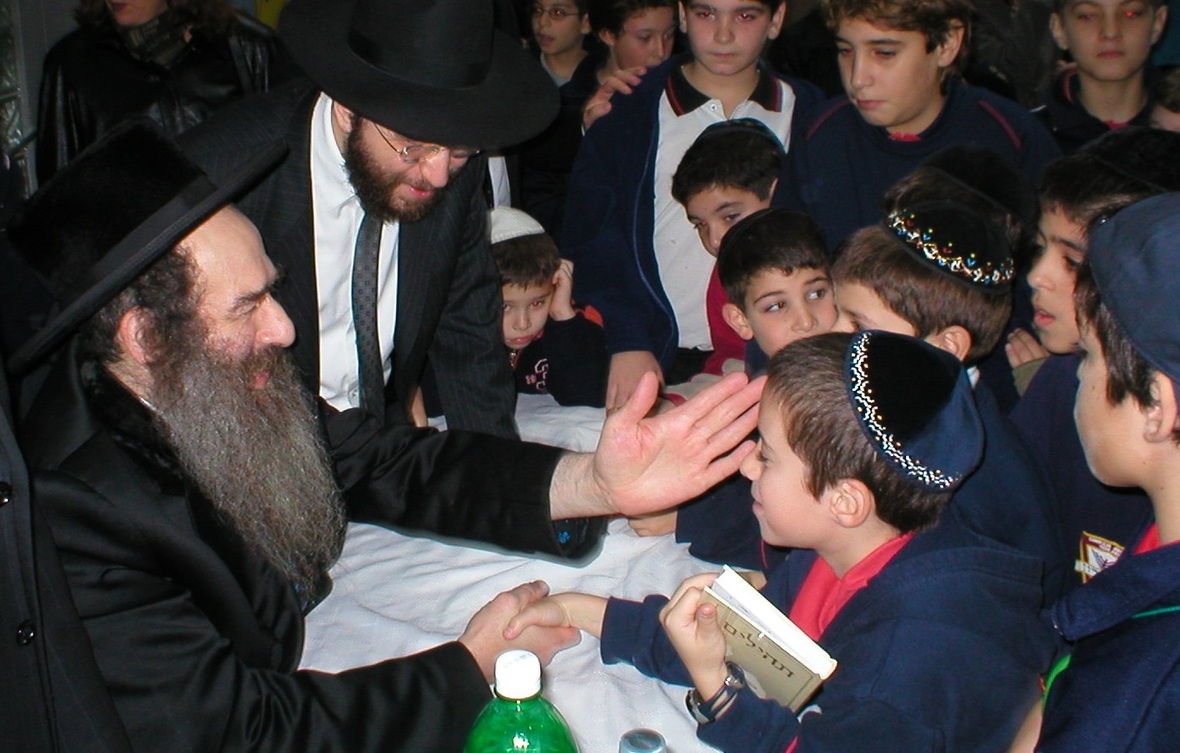
The greatest gift you can give someone is to greet them with panim yafos, a friendly and welcoming disposition.
Chazal taught (Kesuvos 111b) that showing your teeth, smiling, is "sweeter than milk." Meaning, greeting someone with a pleasant, happy and warm smile is a greater kindness than providing them with warm milk. The milk will invigorate their body, but the smile revives their soul, which drives the successes of everyone.
Raising Children
This is critical when it comes to raising and educating children.
Even a baby can discern and react to facial expressions. When you smile at a baby, the baby will laugh and smile back. But, if you look angry or unhappy, you can even make a baby cry. Parents need to be extremely careful to always greet their children with a warm and loving temperament ensuring that their children will grow up happy and healthy, emotionally, physically and spiritually.
Chazal warns us (Gittin 7a) that on Erev Shabbos, as it gets darker outside and Shabbos gets closer, the Yetzer Harah tries to tempt us with anger; in the hectic rush to prepare for Shabbos the Yetzer Harah wants you to lose your temper with your family. Therefore, a person must be even more careful to speak gently, patiently and lovingly with his family on Erev Shabbos, as it says (Koheles 9:17), The words of the wise are heard [when spoken] softly.
In Agra D'Kalah (Parshas Vayeishev), R' Tzvi Elimelech from Dinov, zt"l, quotes R' Mendel from Rimnov, zt"l, who taught that a person who returns to their home, should not do so while they are famished, because it will cause them to be short and angry with their family.
Acceptance of All
And, even when a child starts to drift from the just path of Torah and mitzvos, they need to be welcomed and treated with the utmost love and acceptance, a true panim yafos.
The Seforim HaKedoshim explain that this is the meaning of the Mishnah in Pirkei Avos (1:15), And receive every man with a pleasant countenance. You must treat everyone with loving acceptance, even when someone's behavior contradicts Torah values. If you accept them and they feel welcomed despite how they behave, they will be willing to listen to what you have to say, and you will have an opportunity to offer advice and guidance.
They might even return them to a life of Torah. As Chazal relates (Bava Metzia 85a) that after R' Eliezer ben R' Shimon passed away, his son abandoned Torah and mitzvos. When Rebbe heard about this, he invited him over and showed him a tremendous amount of respect. He gave him a coat tailored from gold and he called him "Rebbe". The son swore that he would no longer return to his previous deeds, repented and became a tremendous Torah scholar.
Even if you cannot guide a son back to Torah and mitzvos, that love at the very least, can protect him from making the gravest mistakes. They will want to avoid the embarrassment of facing their loving parents and supportive parents. As it says (Avos D'Rebbe Nossan 12:3): Aharon HaKohein greeted everyone with a warm and loving temperament. In doing so, he prevented them from committing the gravest sins. For, if they were to sin, they knew that they had to face Aharon and they would think to themselves, "Woe to me! After such a heinous sin, how can I face Aharon who also treated me with such caring acceptance!?"
The Torah teaches us (Breishis 25:28), "And Yitzchak loved Eisav because [his] game was in his mouth"... Yitzchak wanted to spare his son from committing the worst sins. So, he showed him acceptance and love. He didn't speak with him harshly. He knew that love and acceptance were the keys to trying to save Eisav spiritually.
This is especially critical when a child faces tremendous challenges. R' Aharon of Zitmar, zt"l, wrote in Toldos Aharon (Parshas Toldos) that his Rebbe R' Levi Yitzcak of Berditchev, zt"l, showed greater love to Jews who were unobservant than his own students. R' Ahraon, therefore, explained that Yitzchak showed greater love for Eisav because he knew that Eisav needed that support more than Yaakov.
The protection of love
The Seforim explain that this is why Yaakov favored Yoseif. He provided him with a special coat that he did not give his other children. Yaakov saw, with ruach hakodesh, that Yoseif would face tremendous spiritual challenges in his life. And,what could he do to empower and protect his son, to give him the skills and tools to overcome those challenges? Show him love. That love would infuse the strength that Yoseif would need.
Indeed, this love and acceptance saved Yoseif from the most daunting challenges as his life took him to Egypt. At the time he was sold, Yoseif was 17 years old, a teenager, a time in one's life when their passions are flowing through their veins. He faced the temptations of Potiphar's wife, who dressed pleasantly and begged him to commit a horrific sin. A sin which was common in Egyptian culture. However, the love that Yaakov showed him, the acceptance, protected Yoseif, enabled him to overcome the temptation to sin and, in fact, to flee from it with all his might.
This is perhaps the deeper meaning of the words of Chazal that taught that when he was tempted to sin with Potiphar's wife, he saw an image of his father. He remembered his father's smiling face, loving countenance, and his warm support. He didn't want to disappoint his father and stray away from the path of Torah and mitzvos. That loving environment that he grew up in gave him the strength to overcome the greatest temptation in the darkest times.


Comments
Post a Comment