"And you shall place bread on the table before Me at all times". (Shemos 25:30)
Finding a Rebbe
There was a community who had lost their Rebbe and they were desperate to find a new leader, someone who could help inspire the chassidim. They had heard about the great tzadik from Premishlan, Reb Meir. The community decided to send two Chasidim to the Rebbe to observe and see if this tzadik could be their next Rebbe.
The journey had taken longer then expected and the Chassidim arrived just in time for candle lighting on Erev Shabbos, Friday. They didn't even have time find a place to eat their Shabbos meals and they went straight to the Reb Meir's Beis Medresh to daven.
After davening ended on Friday night, each of these two chassidim were cordially invited to join to different hosts for their Shabbos meals.
At the first home, the host ate very little himself, making his guest, despite his hunger, feel embarrassed and self-conscience about eating. So, he decided not to eat. At the other home, the host had a tremendous amount of food and was eating plenty. However, he didn't slice the challah or pass it around. This chossid felt embarrassed to ask for a piece of bread, so, he too, left his meal hungry.
The following day, after davening, they both went back to their respective hosts for lunch and the scene repeated itself much like the night before. To make matters worse, these chassidim journey to this town to experience what the Rebbe was like. However, throughout the entire Shabbos so far, they hadn't heard the Rebbe deliver a Dvar Torah or see even the slightest sign that the Rebbe had Ruach HaKodesh. This was clearly not the tzadik they were looking for. Frustrated and hungry, they decided to skip the Rebbe's Shaleh Sheudos. However, when they went to their hosts for the third meal, no one was home. Everyone had gone to the Rebbe's tish. With no other choice, the chassidim reluctantly went back to the Beis Medresh for the Rebbe's Shaleh Sheudos tish.
When they entered the shul, the tish was well underway. They sat among the crowd. The Rebbe then asked, "Where are the guests who came to this town looking for the Rebbe with Ruach Hakodesh?"
No one answered.
"Where are the guests? Why are they hiding from him?" the Rebbe asked.
Still silence.
"If they do not present themselves to me they will regret it."
Embarrassed, the Chassidim stood and approached the Rebbe. "Where did you eat your Shabbos meals?" the Rebbe asked. After they answered, the Rebbe called over their hosts.
"The Torah commands us to performs the mitzvah of hanachas orchim, hosting guests and being hospitable. However, this mitzvah needs to be performed properly and with care. When you host a guest, you need to slice enough bread for the guests, so they won't be embarrassed. Even if you do slice the bread, as the host you need to partake so that the guests aren't embarrassed to take as well."
The Rebbe than sliced some challah and provided the guests with a plate of food.
Both the hosts and the guests understood clearly what the Rebbe was referring to. Clearly, the Rebbe had Ruach HaKodesh and the chassidim found their new Rebbe.
This story teaches us a critical lesson. You need to place your heart into the mitzvah of hospitality. It is natural for someone to feel embarrassed when they receive a gift or charity. When they benefit from the kindness of another person. Chazal spoke to this very idea when they taught (Yerushalmi Arla 1:3) that when someone eats at a stranger's table, they find it hard to look their hosts in the eye. Whenever we are helping someone, providing for the needs of those less fortunate, you must do everything within your power to make that person feel comfortable and to alleviate any hint of embarrassment that person might feel as the beneficiary of your kindness.
At the Seder
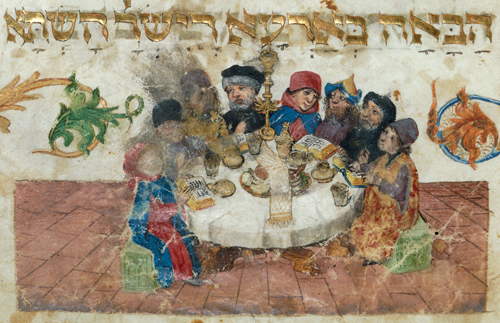
The Rebbe mentioned above, Reb Meir from Premishlan, alluded to this message in his explanation of the order of the Seder on Pesach night. We begin with "Kadesh." If someone wants to sanctify themselves, to bring holiness into their lives, they need to go through a process of "Urchatz", washing their hands of the sins they may have committed. Then, "Karpas", which can be divided into two words: "Kar"- pillow" and "pas" – bread. You need to welcome guests into your home. Then "Yachatz". We must break the matzah in half providing for you and your guests. In that moment, you can experience the "Magid," the story of the Exodus followed immediately by a final cleaning, "Rachatzah". Through the mitzvah of hachnasas orchim you can purify, cleanse and elevate yourself.
Hospitality Like a Tzadik
The pasuk in Mishlei (13:25) says, "The righteous man eats to his heart's content, but the belly of the wicked is empty." Reb Baruch from Mezibuz explained that this pasuk is referring to hachnasas orchim. A righteous person will eat with his guest even if has already eaten to ensure that their gust feels comfortable enough to partake until they are full as well. However, a wicked person, even if they are hungry, will refrain from eating in front of their guest so that they will feel embarrassed to eat.
The Sefer Panim Yafos teaches that if you provide for someone in a way that isn't pleasant and respectful, and they can see on your face that you are not completely happy to be in that moment with them, then the Torah considers your kindness as if you had done nothing at all.
In Our Parsha
This is what our pasuk is teaching us here. "When you place bread on the table", you must make sure that you welcome the guests into your home, in your life in a way that is "face before always" - that the face of the guest can be constantly in front of the people in the house, that they won't have to hide their faces from a shame or sense of embarrassment.
Comments
Post a Comment