We live in an era when we are spiritually challenged, similar to the temptations which existed in the Hasmonean period. Heathens and heretics of the nations work together with apostate and self-hating Jews to remove the faith of pious Jews who honor Hashem, just as the Hellenists worked together with Hellenized Jews of their epoch.
We may not sit with folded hands. This is a time of war, as my holy ancestor Rebbe Isaac of Komarna zy"a writes, that the War of Gog and Magog, which will come before the coming of Moshiach, will be a spiritual war, where we will need to fight to be spared from the heresy which will spread in the world at that time in history.
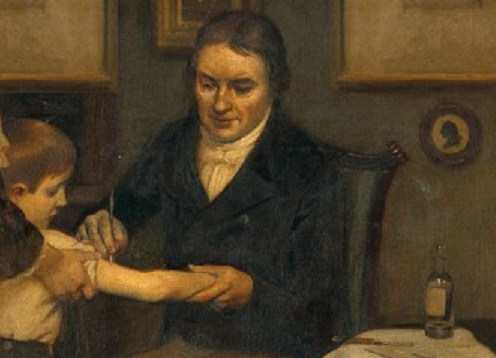
The spirit of heresy in our era is similar to an epidemic, which is a contagion which spreads from one person to another. When an epidemic is spread, people seek a vaccine to be spared from the contagion. The vaccine against heresy is to study ethical teachings from the Torah (Mussar), Hasidic literature, and stories of our Tzaddikim, which strengthen our faith and piety.
Therefore, when the emissaries of the Yetzer Hara come with claims that we need to add other curricula of study to our children's schools in order that they be more able to fit in with people of our times, it is not enough that the administrators should fight against adding forms of study which may chill the faith and piety of the children, but they also must look into whether they need to increase the religious instruction of the children to include things which will strengthen their faith and piety, in order to inoculate them from the plague of heresy which lurks in the street.
Sorrowfully, I have seen along the years that many Yeshivos fail to set time to study Mussar or other inspirational material. This can cause even the most excellent students, who succeed within the walls of these yeshivos, to fall spiritually shortly after leaving the yeshivah. The lack of strengthening their faith causes them to become weak in religious observance, and this can also cause a person to become arrogant and to have other negative character traits which can destroy a person's life.
In the years before World War I, some of the Gedolim in Lithuania haven't recognized the need to establish daily Mussar study in their yeshivos, because they thought that it was sufficient to rely upon the auspicious nature of purity which exists in all forms of Torah study. However, the Chofetz Chaim, zt"l, wrote in his Sefer Beis Yisrael which was published in 1928, that he spoke in the later years with these Gedolim, and they all agreed that in the new era it became necessary to fight against the increase of false ideologies which are spreading, and it was thus necessary to add Mussar study to the yeshivah curricula, because without this it is impossible to trust that Hashem's Torah and devotion to Him will remain strong among us.
This fundamental concept is clearly taught in the Talmud (Shabbos 31a) where our Sages bring a parable, that just as when one places wheat in a silo, one must place some salted soil among it as a preservative, so too must Torah study be combined with fear of Heaven, because only in such a manner will a person remain faithful to the Torah for an extended period of time.
In this fashion the Baal Shem Tov zy"a explained the verse "His words are evil and deceitful; he will not intelligently consider doing good" (Psalms/Tehillim 36:4), that the main deceit of the Yetzer Hara against a person is that he will not engage in intelligent consideration, through study of ethical literature which help a person improve himself, meaning the study of Mussar and other works which encourage a person toward Yiras Shomayim. Wherever the Yetzer Hara succeeds in preventing a person from engaging in this study, it doesn't bother him so much that this person is studying other parts of Torah, because Torah has no lasting effect without Yiras Shomayim.
If someone fails to be strong in faith and piety, his motives and intentions in his study will lack devotion to learning Hashem's Torah in order to connect to Hashem and to know what to do. Rather, a person who is learning without piety simply enjoys the intellectual stimulation of Torah study, similar to any other form of study. In this manner, it is possible to spend many days in Torah study without thinking about God at all, and even when he prays and recites brachos he has no kavanah. In this manner, one can come to the opposite of the true goal of the mitzvah of Torah study.
There is an amusing story about a young genius who studied in a yeshivah which does not teach Mussar. One morning he tells the Mashgiach how he dreamed that God spoke to him personally. The Mashgiach was not impressed with this, and he told him "it appears to me that you must have been thinking much about God during the day, and this is why you dreamt about God during the night, as it is natural for people to dream about whatever they think about during the day". The boy replied, "trust me, honored Mashgiach, I did not think about God at all yesterday, because my mind was totally devoted to Torah study, and I did not waste even a moment, so there was no time for me to think about God!"
Based on the above, we find it possible to explain that which we find in this week's parshah about Yosef HaTzaddik: it is written "and Yisrael loved Yosef more than any of his sons, because he was a ben zekunim to him" (Genesis/Bereishis 37:3). Onkelos translates "ben zekunim" (which usually is translated as "son of his old age") as "he was a wise son to him", and Rashi explains that Yaakov taught to Yosef "everything" he learned from Shem and Ever. It is possible to say, that when it says that Yaakov taught him "everything", it means that he also taught him teachings that specifically bring yiras shomayim, because this is the only way to become a wise son, as it is written "the beginning of wisdom is the fear of Hashem" (Psalms/Tehillim 111:10).
Therefore, Hashem caused Yosef HaTzaddik to go down to Egypt, in order for him to teach the Israelites who would later go down to Egypt, to teach them, that if they learn Mussar and piety like Yosef, then even when they are among atheists, like the king Pharaoh who said "I do not know Hashem" (Exodus/Shmos 5:2), it is possible to remain pious like Yosef, who said "I fear God" (Genesis/Bereishis 42:18).
It is also possible to explain that which we find in the story of Hanukkah, where we thank Hashem in the brachah of "Al HaNissim" for that which we accomplished by conquering the Hellenists who sought to cause us to forget "Your Torah". It does not say to forget "the Torah", rather "your Torah", because the Hellenists had no problem with Torah study that was an intellectual pursuit without any religious devotion. Their main effort was to eliminate Torah study that brings piety and fear of Hashem, and to cause the Jews to forget that it is "Your Torah", meaning Hashem's Torah, which would mean that the Jews would no longer be able to conquer their temptations, and that would lead to them to be "taken away from the laws of Your Will".
Therefore, in our days, it is a great mitzvah to make sure that every yeshiva has time set aside to study Mussar and fundamentals of faith, which bring us to Yiras Shomayim and good middos. Parents and teachers must speak words of faith and tell stories of tzaddikim, because through this they will raise a generation that will be worthy to receive the coming of the True Moshiach, soon and in our days, Amen.


Comments
Post a Comment